Digital Wallets in 2026: A Complete Guide for Crypto Users and Creators
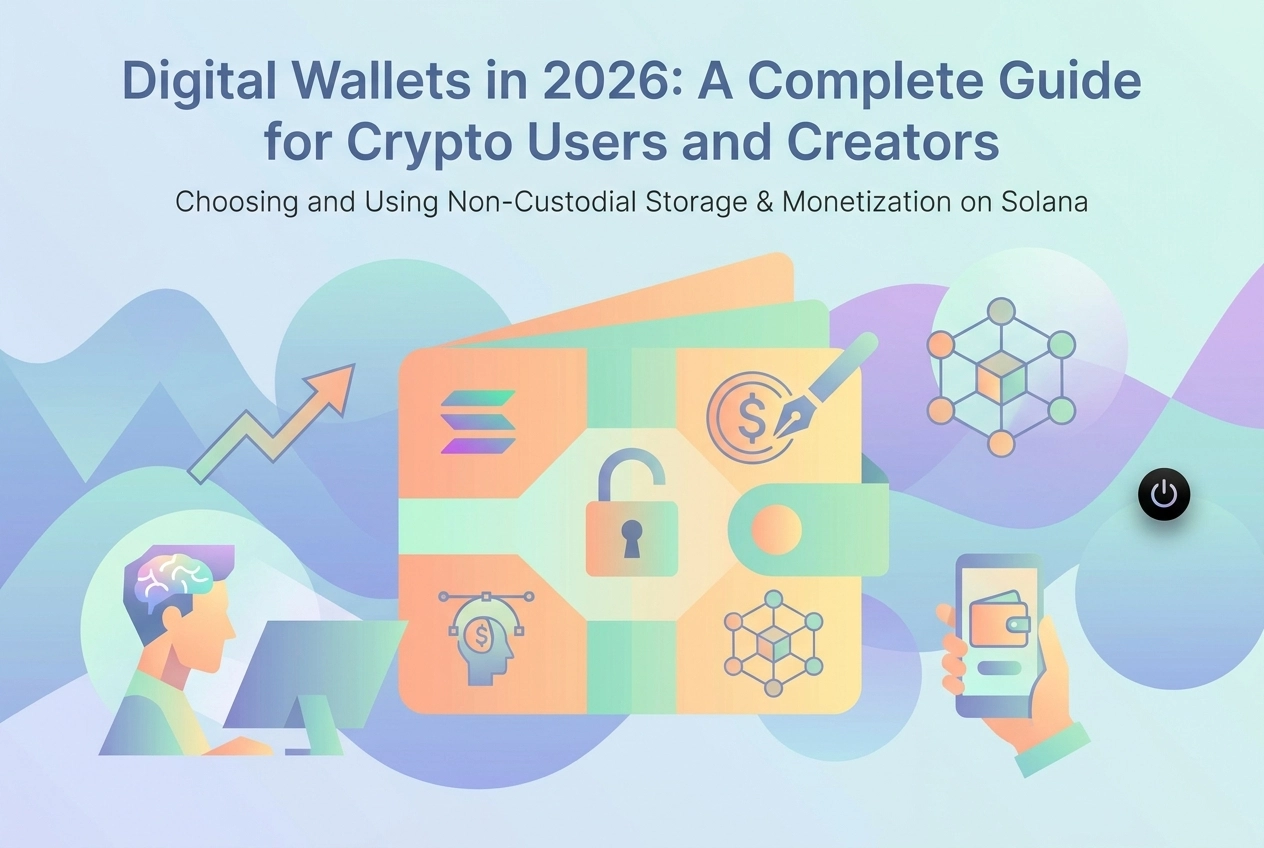
Picture this: you've just received your first crypto payment, or maybe you're eyeing that NFT drop everyone's talking about. But then comes the big question, where exactly does all that digital money actually live? That's where a digital wallet comes in, and honestly, it's one of the most important tools you'll ever use in the crypto world.
If terms like "seed phrase," "hot wallet," or "gas fees" make your head spin right now, don't worry. You're in exactly the right place. The crypto space moves fast, and by 2026, digital wallets have become smarter, more secure, and more beginner-friendly than ever before.
In this guide, we're breaking everything down into simple, digestible pieces. You'll learn what a digital wallet actually is, how it works, which types are best for different needs, and how to choose the right one for your situation. Whether you're just getting started or looking to level up your crypto game, this list has you covered from start to finish. Let's dive in!
What Is a Digital Wallet?
Let's clear something up right away: a digital wallet doesn't actually hold your cryptocurrency. Think of it more like a keychain. Your crypto lives on the blockchain, and your wallet stores the private keys that prove you own it and let you access it. Without those keys, you simply can't move your funds. That's the foundation everything else builds on.
From there, wallets split into two main types based on how they connect to the world. Hot wallets are software-based and always connected to the internet, making them convenient for everyday use, quick trades, and sending payments. Cold wallets are physical hardware devices that stay completely offline, making them far more secure for storing larger amounts long-term. Hardware devices like the Ledger Nano X support thousands of cryptocurrencies while keeping your private keys locked inside a secure chip that has never been hacked.
The next distinction you'll hear constantly is custodial vs. non-custodial. With a custodial wallet, a third party (usually a crypto exchange) holds your private keys on your behalf. It's convenient and beginner-friendly, but it means you're trusting someone else with your funds. Non-custodial wallets flip that completely: you control your keys, full stop. No third party can freeze, seize, or lose your assets. As the saying goes in crypto circles, "your keys, your crypto." Understanding this divide is one of the most important things any new crypto user can learn, and the research backs it up: the non-custodial market is growing at a 24.3% CAGR as more people choose self-custody.
You've also probably heard "digital wallet" used to describe apps like Apple Pay or PayPal. Those store your payment credentials and fiat balances, not cryptographic keys. They're useful tools, but they're a completely different animal. This guide focuses on crypto wallets specifically.
Finally, if you go the non-custodial route, you'll receive a seed phrase, typically 12 or 24 random words generated when you set up your wallet. This is your master backup key. Lose it and nobody can recover your funds, not a support team, not the wallet developer, nobody. Write it down on paper, store it somewhere safe and offline, and never share it with anyone. Protecting your seed phrase is genuinely the single most important security habit in crypto self-custody.
Why Non-Custodial Wallets Became the Standard in 2026
If you've been paying attention to the crypto space over the past couple of years, you've probably noticed a clear shift happening. People are moving away from trusting third parties with their funds, and for very good reason.
The Wake-Up Call That Changed Everything
The centralized platform collapses of 2024 and 2025 hit hard. Exchange hacks, sudden bankruptcies, and regulatory seizures left countless users locked out of their own funds, sometimes permanently. It wasn't the first time the crypto world had seen this kind of chaos, but the pace and scale of failures accelerated mainstream migration to self-custody wallets at a level not seen since the FTX implosion shook the industry back in 2022. Each new headline about a frozen account or a hacked exchange sent another wave of users searching for a better way to hold their assets.
One Principle That Says It All
Out of all that turbulence, one core idea emerged with crystal clarity: when you hold your own keys, no exchange hack, platform bankruptcy, or regulatory seizure can touch your funds. That's it. That's the whole pitch. As Cobo's 2026 non-custodial wallet guide frames it, true ownership means zero counterparty risk and no single point of failure. The non-custodial wallets market, currently valued at $4.8 billion and projected to reach $18.3 billion by 2033, reflects just how seriously people are taking that principle.
The Numbers Prove It's Mainstream Now
This isn't a niche crypto thing anymore. Trust Wallet alone reports over 200 million global users as of 2026, which tells you the audience already comfortable with self-custody wallets is genuinely enormous. Meanwhile, institutional players are gravitating toward MPC-based wallets and enterprise-grade custody solutions from providers like Cobo. But individual users, creators, and streamers? They're firmly planted in the non-custodial camp, preferring direct control over complex corporate infrastructure.
Your Wallet Is Now Your Identity
Perhaps the biggest shift worth noting is that your digital wallet is no longer just a place to store tokens. It's becoming your universal login credential across Web3 applications. Wallet sign-in is steadily replacing the old email-and-password model, meaning your wallet functions as both your vault and your verified identity online. Platforms like BullDash are already built around this reality, letting you sign in with Phantom, Backpack, Solflare, or 20+ other wallets instantly, without ever surrendering your keys to anyone.
The Top Digital Wallets in 2026
So which digital wallets are actually leading the pack right now? According to FoxWallet's January 2026 roundup, the five best crypto wallets of 2026 are FoxWallet, MetaMask, OKX Web3 Wallet, Trust Wallet, and Coinbase Wallet. Each one serves a different type of user, and knowing the differences matters a lot when you're figuring out which one fits your needs.
1. MetaMask
MetaMask is the most widely used non-custodial wallet in the world, trusted by over 100 million users as of August 2026. It's built around the Ethereum ecosystem and offers genuinely impressive tooling for DeFi and NFTs, making it a solid pick for anyone diving into decentralized finance. You can explore lending protocols, discover NFT collections, and even trade tokenized stocks and ETFs directly through the app. That said, MetaMask doesn't offer native Solana support in the way Solana-first wallets do, and there's no creator monetization layer anywhere in its feature set. It's a powerful general-purpose wallet, but it wasn't built with streamers or content creators in mind.
2. Trust Wallet
Trust Wallet is the scale champion of the digital wallet world. With over 200 million users globally, support for 100+ blockchains, and access to more than 10 million digital assets, it covers an enormous amount of ground. You can stake, swap, explore DeFi, trade NFTs, and as of August 2026, even earn yield on stablecoins through its newer Stablecoin Earn feature. It's an incredibly versatile tool, especially if you're managing assets across multiple chains from your phone. The catch is that Trust Wallet is entirely general-purpose. There's no creator economy tooling, no tipping infrastructure, and no way to monetize a live stream directly through it.
3. Coinbase Wallet
Coinbase Wallet gets recommended a lot for beginners because of its clean interface and its connection to one of the most recognizable names in crypto. It's a reasonable starting point if you're just getting comfortable with the space. However, it's worth understanding that Coinbase Wallet sits closer to a custodian-adjacent model compared to fully non-custodial alternatives. That distinction matters if self-sovereignty is a priority for you, since the level of control you have over your private keys differs meaningfully from wallets where you and only you hold them.
4. OKX Web3 Wallet
OKX Web3 Wallet earned its spot on top crypto wallet lists for 2026 thanks to broad multi-chain support and tight integration with the OKX exchange. It functions almost like a DeFi and airdrop super-app, which makes it popular with active traders. If you're looking to hunt airdrops or manage positions across multiple chains, it's a capable tool. But its design is clearly oriented toward traders rather than creators, so if you're a streamer or educator trying to monetize your audience, it doesn't offer much.
5. Phantom, Backpack, and Solflare
These three wallets form the Solana-native trio that dominates the ecosystem. Phantom alone has been chosen by over 15 million users and supports Solana, Bitcoin, Ethereum, and Polygon through a single interface. Backpack and Solflare round out the group as go-to options for anyone operating on Solana. All three are polished, well-supported general-purpose Web3 tools. None of them, however, include built-in live-streaming features or creator monetization capabilities. They're great for holding and managing assets, but they stop well short of helping you actually earn from your audience on-chain.
That gap across every wallet on this list is worth noting. According to Money.com's August 2026 rankings, the best wallets of the year are evaluated on security, multi-chain support, and asset management. Creator monetization doesn't appear anywhere in the evaluation criteria, because no wallet currently offers it. That's exactly the space platforms like BullDash are stepping into, connecting your Solana-native wallet directly to a live-streaming and tipping layer that none of these wallets provide on their own.
Solana-Native Wallets: Phantom, Backpack, and Solflare
If you're spending any real time in the Solana ecosystem, you're going to hear the same three wallet names come up again and again: Phantom, Backpack, and Solflare. These aren't just popular options pulled from a generic list. They're purpose-built for Solana, and each one serves a slightly different type of user. Here's what makes each one worth knowing about.
Phantom: The Friendly Front Door to Solana
Phantom is the wallet most people install first when they enter the Solana world, and there's a good reason for that. It was built from the ground up with simplicity in mind. The interface is clean, the browser extension installs in seconds, and the mobile app works just as smoothly on iOS and Android. It supports SOL, SPL tokens, and NFTs natively, so you're not hunting through settings to manage your assets. According to a 2026 comparison of the best Solana wallets, Phantom is consistently described as "the default for newcomers" and the first wallet most new Solana users should install. It has also expanded to support Ethereum, Base, Polygon, and Bitcoin within the same interface, so it grows with you as your portfolio does. If you're brand new to digital wallets and want something that just works, Phantom is where most people start.
Backpack: Built for the Web3 Power User
Backpack takes a different approach. It was designed around the xNFT ecosystem, where NFTs aren't just digital art but actually executable applications you can run directly inside your wallet. That might sound technical, but what it means in practice is that Backpack is deeply wired into Solana's DeFi and GameFi layers. It supports staking, has hardware wallet options available, and attracts the kind of user who wants more than a basic asset manager. If you're a GameFi creator, a crypto trader, or someone building on Solana, Backpack fits naturally into your workflow. The 2026 Solana wallet comparison from eco.com puts it plainly: Backpack is the pick for "xNFT-native DeFi power users."
Solflare: The Veteran with the Deepest Solana Roots
Solflare has been around since 2020, making it the oldest wallet built specifically for Solana. That history shows in its feature set. It offers advanced staking tools, compatibility with both Ledger and Keystone hardware wallets, and one of the strongest implementations of the Token-2022 standard (also called Token Extensions) among any Solana wallet. That last point matters more than it might seem. According to the Solflare wallet guide for 2026, Token Extensions introduce programmable features like transfer hooks and confidential transfers, which are architectural to Solana and have no native equivalent in Ethereum-focused wallets. In plain terms, confidential transfers let token creators build privacy protections directly into the token itself, and only certain wallets can handle them. Solflare is one of them.
How All Three Connect to BullDash
Here's where this gets directly useful. All three of these wallets, Phantom, Backpack, and Solflare, are supported by BullDash's wallet sign-in. If you already have one of these wallets set up, you can connect to BullDash instantly and start receiving tips or subscriptions without creating a new account, moving funds, or going through any approval process. BullDash supports 20 or more wallets in total, but these three Solana-native options are particularly relevant because tokens like $POORGOAT and $BIF use the Token-2022 standard. Ethereum-focused wallets simply can't handle those tokens natively, while Solflare and Backpack can. If you're a creator planning to accept newer SPL tokens, your wallet choice is not just a preference. It's a practical decision that affects what you can actually receive.
The Creator Monetization Gap Nobody Is Talking About
Here's something worth pausing on for a moment. You've spent the last few sections learning about digital wallets, what they do, how they work, and which ones are leading the pack in 2026. But there's a massive blind spot in the entire wallet industry that almost nobody is talking about, and it directly affects anyone trying to earn money from content online.
Every top-ranked digital wallet right now, whether that's MetaMask, Trust Wallet, Coinbase Wallet, OKX, or FoxWallet, is built to do one thing really well: manage your crypto assets. Swap tokens, store NFTs, access DeFi protocols, connect to Web3 apps. These are genuinely useful features, and millions of people rely on them daily. But open up any of these wallets and try to find a "go live and earn tips from your audience" button. You won't find one. Not even close. The wallet layer and the creator monetization layer exist in completely separate worlds, and nobody at the wallet level has moved to connect them.
This matters because the creator economy is enormous. Hundreds of millions of people globally participate in content creation in some form, from full-time streamers to part-time educators to GameFi players who build audiences around their on-chain gameplay. GameFi in 2026 has matured well beyond speculative play-to-earn models into something much more sophisticated, producing massive communities of wallet-native users who transact on-chain as a default habit. These audiences already have wallets. They already hold tokens. They genuinely want to pay their favorite creators directly. But the infrastructure to make that happen inside a streaming environment simply doesn't exist on any mainstream platform.
Traditional platforms do offer monetization, to be fair. But the terms aren't great. Platform fee cuts can run anywhere from 5% to 12% on subscription platforms, with payment processors adding their own slice on top. Payout holds can stretch for weeks. Everything runs through custodial systems, meaning the platform holds your money and releases it on their schedule. There's no on-chain settlement, no instant access to your earnings, and international fans from emerging markets often hit geographic payment blocks entirely.
The irony is that the behavioral groundwork for fixing this is already laid. Stablecoins are increasingly functioning as financial plumbing rather than speculation vehicles, with the total stablecoin market cap surpassing $300 billion by end of 2025. Users are already comfortable keeping assets on-chain, earning yield, and transacting peer-to-peer. The habits are there. The wallets are there. The audiences are there. What's been missing is a streaming platform actually built to plug into all of it natively.
That's exactly the gap BullDash was built to fill. It's a non-custodial live streaming platform built specifically for crypto-native creators, where tips move peer-to-peer on-chain, creators keep 99.1% of every tip, and there are zero payout holds. The infrastructure gap is real, but it now has a direct answer.
Custodial vs. Non-Custodial for Creators: What the Fees Actually Look Like
Let's get into the numbers, because this is where the real difference shows up.
Traditional streaming platforms operate on what's called a custodial model. When a viewer sends you money through one of these platforms, the platform catches it first. They hold it, process it, apply their fee structure, and then release whatever's left to you on their schedule. You have zero control over when that money arrives, what form it takes, or how long it sits in their system before it reaches you.
The Fee Reality on Traditional Platforms
The fee cuts on traditional streaming platforms aren't small. Standard subscription splits can take 30% to 50% of your earnings depending on your tier and how you're monetizing. Most smaller and mid-sized streamers end up on the less favorable side of those splits, which means nearly half of every dollar a viewer sends in your direction never actually reaches you. It's baked into the system, and unless you hit certain performance thresholds, you don't get to negotiate.
The BullDash Difference
BullDash flips this model entirely. Because it's built on non-custodial architecture, money moves directly between the viewer's wallet and the creator's wallet the moment a transaction happens. There is no platform sitting in the middle, holding your funds and taking a cut before releasing them on a schedule you didn't agree to.
The numbers reflect that structure. BullDash charges a 0.9% fee on tips, which means creators keep 99.1% of every tip they receive. On subscriptions, creators retain 95%, with only a 5% platform fee. Compare that to a 30% to 50% platform cut and the math starts to look pretty striking, pretty fast.
The Payout Hold Problem Is Real
Here's something a lot of new creators don't find out until it's already frustrating them: on custodial platforms, your first payout can take 45 to 60 days to actually arrive. That's not a bug or an edge case; it's just how custodial infrastructure works. The platform batches payouts, runs their own verification processes, and releases funds on their own calendar. You're a line item in their accounting system, not a direct recipient.
With BullDash, settlement is instant by design. The transaction goes from the viewer's wallet to your wallet at the moment it happens. No holds, no processing queues, no waiting period.
What This Actually Means for Your Income
Run the numbers on a creator bringing in $1,000 per month in tips. Under a 30% platform cut, $300 disappears before it ever reaches you, leaving $700. Under BullDash's 0.9% fee, you're paying $9 and keeping $991. That's a $291 monthly difference, which adds up to roughly $3,492 per year sitting in your own wallet instead of being absorbed as platform overhead. For a creator just starting out, that gap is significant.
Why Solana Is the Right Chain for Streaming Tips and Micro-Transactions
Not every blockchain is built the same, and when it comes to streaming tips and small payments, that difference matters a lot more than most people realize.
Solana processes thousands of transactions per second, with average fees sitting around $0.00025 per transaction. That is not a typo. It is roughly one quarter of one tenth of a cent. At that price, the blockchain infrastructure is basically invisible to the economics of a tip. Whether a viewer sends $1 or $10, the fee is too small to even register. That is what makes micro-transactions like streaming tips actually work on Solana at scale, rather than just in theory.
The Ethereum Fee Problem Explained Simply
Here is a comparison that makes the difference concrete. Ethereum mainnet gas fees fluctuate, but during periods of network congestion they can easily run $5, $10, or more for a simple token transfer. A viewer who wants to send a $2 tip on Ethereum would watch the gas fee eat the entire amount before it ever reaches the creator. The tip becomes a net loss for the viewer and delivers zero to the creator. The math simply does not work for small payments on that network.
On Solana, that same $2 tip settles in under a second for a fee so small it rounds to zero in any practical calculation. The creator receives value. The viewer pays what they intended. No friction, no math gymnastics, no minimum tip amount required to make the transaction economically sensible.
What SPL and Token-2022 Actually Do
Solana runs on two main token standards. The original SPL Token Program handles the basics, minting, transferring, and managing tokens reliably at scale. The newer Token Extensions program (Token-2022) goes further by baking programmable logic directly into the token itself.
This matters for tipping currencies like $ANSEM, $POORGOAT, and $BIF because Token-2022 extensions allow custom behavior at the contract level. Transfer fees, token-gated access, and other rules can be configured without relying on separate smart contract complexity layered on top. The functionality lives inside the token from day one.
Why BullDash Is Built on Solana Specifically
This is not a coincidence or a branding choice. Solana's architecture is the reason peer-to-peer creator monetization on BullDash works the way it does. The platform settles tips instantly, keeps creator earnings at 99.1%, and moves money directly between wallets with no holds. That entire model depends on a chain where transactions are fast, cheap, and final.
With 3.5 billion monthly transactions and 50 million monthly active addresses on the network, Solana in 2026 is mature infrastructure, not an experiment. For creators accepting tips in any SPL or Token-2022 mint, every viewer interaction converts directly into real earnings. There is no technical friction quietly shaving value off each transaction before it arrives.
How BullDash Combines a Non-Custodial Wallet Layer with Live Streaming
Everything you've read about digital wallets, Solana, and creator monetization gaps has been building toward this. BullDash is where all of it comes together in one practical, ready-to-use platform.
Built From the Ground Up for Crypto Creators
BullDash is the first live streaming platform designed specifically for the crypto world, and that distinction matters more than it might sound. If you're a crypto trader doing live market commentary, a GameFi creator running tournaments, an educator breaking down DeFi concepts, an X Spaces host, or an IRL content maker, this platform was built with your specific workflow in mind. You don't need to apply for a partnership, sit on a waitlist, or hit some arbitrary follower threshold before you can start earning. You press "Start Streaming" and you're immediately eligible for tips and subscriptions. That frictionless access removes a barrier that has historically kept crypto-native creators stuck using platforms that weren't designed for them.
Your Existing Wallet Is Your Login
Here's something that makes a lot of sense once you hear it: BullDash supports sign-in through 20-plus wallets, including Phantom, Backpack, Solflare, Trust Wallet, and MetaMask. If you already have any of these wallets set up, and you've been following this blog post, there's a good chance you do, then you can connect to BullDash and start monetizing in minutes. No new accounts to create, no passwords to remember, no email verification loops. Your wallet becomes your identity on the platform. That's the wallet-as-identity trend that has been gaining momentum throughout 2026, and BullDash puts it into direct practice for the creator economy.
Non-Custodial by Architecture, Not Just by Marketing
This is the part that matters most. BullDash never touches your keys or your funds. When a viewer sends you a tip, that payment moves peer-to-peer directly on the Solana blockchain. The platform collects a 0.9% fee on tips and 5% on the standard $5-per-month subscription price. Creators keep 99.1% of every tip and 95% of every subscription. There are no payout holds, no processing delays, and no middlemen sitting between you and your audience's payment. Settlement is instant. That architecture is the same core non-custodial principle you read about earlier, applied specifically to creator monetization.
One Platform, Two Ways In
Not everyone jumping into live streaming is already crypto-native, and BullDash accounts for that. The platform offers dual sign-in, meaning you can connect with a wallet or sign up with a traditional email address. The wallet infrastructure is there when you're ready for it, but it's not a wall you have to climb before you can start. This design makes the platform genuinely accessible to both audiences.
Tip in Any Token Your Community Already Holds
Creators on BullDash can accept tips and subscriptions in any Solana token. That includes community favorites like $ANSEM, $POORGOAT, and $BIF, or literally any SPL or Token-2022 mint you paste directly into the platform. This flexibility is significant because your audience already holds specific tokens. Instead of asking them to swap into something else before they can support you, BullDash lets them tip with whatever is already in their wallet. That removes friction on the viewer side, which typically means more tips and stronger community engagement overall.
How to Connect Your Wallet and Start Receiving Crypto Tips
Getting started on BullDash is genuinely one of the fastest onboarding experiences in the crypto creator space. Here is exactly what you need to do, broken down into five straightforward steps.
Step 1: Pick Your Wallet (or Just Use Email)
The right wallet depends on where you are in your crypto journey. If you are brand new to Solana, Phantom is the go-to choice. It has a clean, beginner-friendly interface and works on both mobile and browser extensions. If you are more of a GameFi native or spend time in DeFi, Backpack is built for that world and plugs in just as smoothly. For anyone doing staking or working with Token-2022 tokens (the newer Solana token standard with extended programmable features), Solflare is the strongest option and offers the broadest compatibility. BullDash supports 20+ wallets total, so most setups already work.
Not ready to deal with a wallet yet? You can sign in with email instead. This is a great entry point if you have never held crypto before and just want to explore the platform first.
Step 2: Connect in Under 30 Seconds
Head to bulldash.live, click the wallet sign-in button, and approve the connection request in your wallet extension or mobile app. The whole process takes under 30 seconds and requires zero personal information. No name, no email, no ID verification. Your wallet address is your identity on BullDash, and the platform never touches your keys or funds at any point.
Step 3: Hit 'Start Streaming' and You Are Immediately Eligible
This is the part that surprises a lot of new creators. The moment you press Start Streaming, you are already eligible to receive tips and subscriptions. There is no approval process, no partnership tier to qualify for, and no minimum follower threshold to hit. Your first second live is your first second earning.
Step 4: Share Your Link and Choose Your Token
Copy your stream link and share it with your audience on X, Discord, Telegram, or wherever your community lives. You can also paste in the SPL or Token-2022 mint address for any specific token you want to accept, whether that is $ANSEM, $POORGOAT, $BIF, or a community token your audience already holds. This gives your viewers real flexibility in how they support you.
Step 5: Watch the Tips Hit Your Wallet in Real Time
Solana transactions typically confirm within 30 to 90 seconds, and fees run under $0.01 per transaction. Tips land directly in your connected wallet during the stream. Check your balance as you go live because there is no holding period, no withdrawal request, and no waiting. The funds are yours from the moment a viewer sends them, with BullDash taking only a 0.9% fee so you keep 99.1% of every tip.
Wallet Security Best Practices Every Crypto User Should Follow
Getting your wallet set up is one thing. Keeping it secure is another thing entirely, and it is honestly the more important skill to build as a crypto beginner. Here are five practices every crypto user should follow, starting from day one.
1. Never Share Your Seed Phrase, With Anyone or Anything
Your seed phrase is the master key to everything in your wallet. If someone else has it, they control your funds, full stop. Over 50,000 users lost a combined $200 million in Q1 2025 alone after entering their seed phrases into fake phishing pages. The critical distinction to understand is this: a legitimate wallet sign-in only asks for a cryptographic signature that proves you own the wallet. It never needs your actual seed phrase to authenticate you. A legitimate platform like BullDash will never ask for your seed phrase at any point during sign-in or setup.
2. Store Your Seed Phrase Offline in Multiple Physical Locations
Never save your seed phrase as a screenshot, in a notes app, or anywhere in cloud storage. Mobile malware actively scans for these. Write it down on paper or, better yet, engrave it on a steel backup plate, and keep copies in at least two separate physical locations. For larger holdings, hardware wallets like Ledger or Trezor keep your private keys fully offline and immune to online threats. A practical rule of thumb is to keep 80 to 90 percent of your holdings in cold storage and only move smaller active amounts to a hot wallet.
3. Use a Dedicated Low-Balance Wallet for Live Sessions and dApps
This one is simple and incredibly effective. Create a separate wallet specifically for interacting with platforms, dApps, and live streaming sessions. Fund it with only what you need for that session. Even if something goes wrong with a connection or approval on that wallet, your primary holdings are completely untouched. Most wallet software lets you manage multiple addresses from a single interface, so setting this up takes only a few minutes.
4. Read Every Transaction Prompt Before You Sign
Wallet drainer attacks almost always rely on users clicking through approval prompts without reading them. A sign-in request should only ask for a signature confirming wallet ownership, nothing else. If a prompt asks for token transfer approval or spending permissions, stop and do not proceed. These are two very different types of requests, and confusing them is exactly how funds get drained in seconds.
5. Enable Phishing Protection and Keep Your Wallet Updated
Phantom and Backpack both include built-in warning systems that flag known malicious sites before you interact with them. Make sure this feature is active in your wallet settings. Beyond that, always install wallet software updates promptly. Updates frequently include security patches against newly discovered vulnerabilities, and running an outdated wallet is an unnecessary risk in a threat environment where $1.2 billion was stolen in Q1 2025 alone. A few seconds to update regularly can save you from becoming part of that statistic.
The Bottom Line on Digital Wallets in 2026
Here is where everything in this guide comes together into a clear, practical picture.
Non-custodial wallets are no longer a niche choice for advanced users. After the centralized platform failures of 2024 and 2025, self-custody has become the baseline expectation for anyone serious about owning their crypto. If your funds are sitting on a platform you do not control, they are not really yours.
Wallet choice still comes down to your specific needs. MetaMask and Trust Wallet cover general multi-chain activity well. Phantom and Backpack are the clear leaders for Solana-native users. But if you are a creator or streamer, none of those wallets actually solve your monetization problem. They hold your assets without helping you earn with them.
That is exactly the gap BullDash fills. It is the only platform that handles both live content delivery and instant, peer-to-peer on-chain payments at the same time. No other wallet or streaming solution combines both sides of that equation.
The practical reality is straightforward. If you already have a Solana wallet like Phantom or Backpack, you are one click away from going live. BullDash supports 20+ wallets, so the infrastructure you already have is enough to get started.
Connect your wallet at bulldash.live, press Start Streaming, and keep 99.1% of every tip your audience sends you. That is the bottom line.
Conclusion
Navigating the world of digital wallets does not have to feel overwhelming. By now, you understand what a digital wallet is, how it keeps your crypto safe, which wallet types suit different needs, and how to choose the right one for your goals. These fundamentals are the foundation of every smart crypto decision you will make going forward.
The crypto landscape in 2026 is more accessible than ever, and your wallet is the key that unlocks it all. Whether you are storing assets long-term, collecting NFTs, or receiving your first payment, having the right wallet makes all the difference.
Ready to take the next step? Pick one wallet from this guide, set it up today, and start small. Every confident crypto user began exactly where you are right now. Your digital future is waiting; go claim it.